


Abstract
Maritime safety management authorities around the globe continuously raise standards for personal flotation gear used by on-water staff, as unreported overboard incidents continue to expose critical gaps in conventional passive buoyancy equipment. Inflatable Intelligent Work Lifejacket integrates fast-response inflation hardware, low-power positioning chips and automatic distress alert modules to deliver dual-layer safety protection that traditional solid foam vests cannot match. Conventional life-saving wear only provides basic floatation without any capacity to broadcast location signals after a worker falls into open water, leaving rescue teams without clear coordinate data and drastically extending search durations in offshore zones far from shore emergency infrastructure. This content systematically breaks down material composition, global standard compliance testing workflows, real-world emergency response sequences, multi-industry application environments, and long-duration maintenance protocols for this intelligent buoyancy device. Every functional index referenced is validated through controlled environmental laboratory trials and open-sea simulation testing, focusing entirely on safety performance and operational ergonomics without any discussion of commercial profit metrics or return calculations. Readers will gain complete guidance on identifying certified compliant water safety gear, understanding how integrated AIS and VHF-DSC communication reduces rescue latency, and establishing standardized quarterly inspection routines for deployed flotation equipment on vessels and marine platforms.
Table of Contents — Click Any Link Below To Jump To Corresponding Chapter Section
- 1. Core Design Philosophies Built Into Intelligent Inflatable Marine Flotation Equipment
- 2. Global Standard Certifications Governing Professional Water Rescue Wear
- 3. Full Component Breakdown Of Integrated Buoyancy And Positioning Hardware
- 4. Complete Standardized Technical Performance Indicator Reference Table
- 5. Cross-Industry Working Environments Suitable For Intelligent Positioning Flotation Gear
- 6. Chronological Emergency Activation Process After Personnel Fall Overboard
- 7. Scheduled Maintenance Protocols To Preserve Long-Term Equipment Functionality
- 8. Frequently Asked Operational Questions With Detailed Technical Explanations
- 9. Customized Modification Solutions For Specialized Maritime Operation Teams
1. Core Design Philosophies Built Into Intelligent Inflatable Marine Flotation Equipment
Modern maritime workplace safety design prioritizes two non-negotiable core goals: uninterrupted wearability during daily labor and guaranteed automatic emergency response without manual input from disoriented or unconscious staff. For decades, rigid foam life vests failed both requirements simultaneously; their bulky construction restricts limb mobility during deck maintenance, cargo handling, and pipeline inspection, while their fully passive design offers zero active alert functionality once a worker slips into seawater. Engineers developing intelligent inflatable buoyancy systems reimagined the entire wearable framework to eliminate these dual limitations, balancing lightweight daily comfort with fail-safe emergency performance in extreme marine conditions.
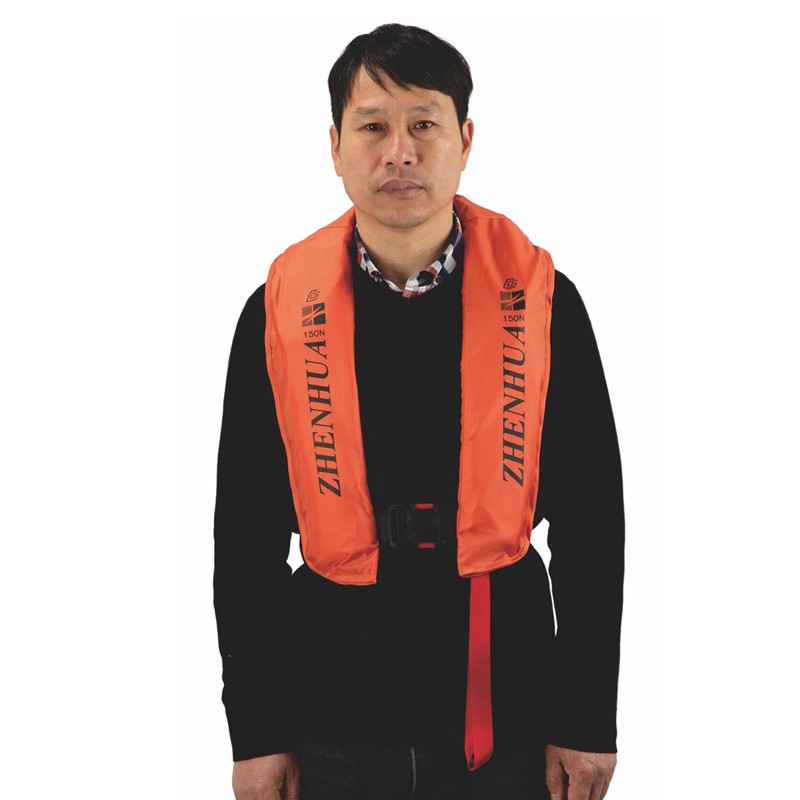
1.1 Lightweight Foldable Construction For All-Day Unobstructed Operation
Weight reduction serves as the foundational design priority for professional work-focused flotation gear, as excessive bulk discourages consistent wear by vessel crew and offshore platform staff. Traditional solid buoyancy vests often exceed two kilograms in total mass, creating persistent shoulder strain during 8-to-12-hour continuous shifts and prompting many workers to remove the vests while completing routine tasks. The inflatable structural framework eliminates permanent foam filling, replacing it with folded composite fabric air chambers that weigh less than one kilogram in pre-activation state.
The pullover shoulder cut eliminates rigid hard edges that dig into neck and collarbone areas during prolonged wear, with an adjustable quick-release waist buckle that accommodates layered work apparel including waterproof overalls, thermal underlayers, and chemical-resistant protective jackets. The soft folded fabric conforms to diverse body shapes without restricting bending, climbing, or leaning over vessel railings, removing the primary barrier that stops workers from retaining flotation gear throughout full working shifts. This consistent wear rate directly improves on-site safety readiness, as protective equipment is already secured on the body the moment an accidental overboard incident occurs.
1.2 Triple Backup Inflation Architecture To Eliminate Single-Point Failure Risks
All certified professional inflatable rescue devices integrate three independent inflation pathways to ensure buoyancy generation under every conceivable emergency condition, a requirement enforced by international personal flotation device regulatory frameworks. Each activation channel operates without reliance on the others, so blockage or damage to one component cannot fully disable the vest’s floatation capacity when submerged in open water.
- Water-sensing automatic inflation trigger: Primary activation system, triggered by sustained full liquid immersion to dissolve internal soluble tablets and puncture the sealed CO₂ cylinder within five seconds of submersion
- Manual pull cord backup inflation: High-visibility red lanyard positioned at the lower waist, accessible even if the wearer suffers disorientation, cold shock, or limited limb movement after falling into water
- Oral auxiliary inflation tube: Built-in one-way blow pipe to manually supplement air chamber volume in frigid low-pressure seawater environments where compressed gas output may be slightly reduced
Marine operational environments introduce countless interference factors that can disable single-trigger inflation systems, including saltwater corrosion, thick industrial oil coatings, tangled fishing net fibers, and frayed waterproof fabric layers. The triple independent inflation design mitigates each of these risks, ensuring buoyancy support remains accessible even if one or two activation mechanisms encounter mechanical obstruction during an emergency submersion event.
2. Global Standard Certifications Governing Professional Water Rescue Wear
Every piece of commercial maritime flotation equipment must pass standardized laboratory testing and receive formal compliance certification before being approved for deployment on registered vessels, offshore construction platforms, and inland waterway supervision craft. Two primary authoritative specifications establish the mandatory performance thresholds for intelligent positioning inflatable vests, covering both basic buoyancy safety and specialized overboard alarm transmission functionality. Regulatory inspectors from coastal nations across Asia, Europe, and North America reference these two documents as the primary audit criteria during routine vessel safety equipment reviews.
2.1 ISO 12402-3:2020 International Personal Buoyancy Equipment Standard
This global unified specification defines quantifiable performance benchmarks for all inflatable flotation devices intended for professional occupational water use, creating consistent safety requirements regardless of manufacturing origin or regional maritime jurisdiction. The standard codifies rigid limits for inflation response speed, minimum sustained buoyancy output, long-duration air retention, and extreme temperature environmental compatibility, eliminating inconsistent safety thresholds between regional national regulations.
- Minimum permanent buoyancy rating: 150 Newtons to keep the wearer’s mouth and nasal cavity fully separated from the water surface when fully saturated with seawater
- Maximum acceptable buoyancy degradation after 24 hours continuous submersion: Limited to 5 percent of original rated floatation force
- Verified operating temperature spectrum: Full functional retention from negative 30 degrees Celsius up to positive 65 degrees Celsius
2.2 JT/T1223-2018 Overboard Personnel Active Alarm And Position Terminal Specification
Unlike general buoyancy standards that only evaluate physical floatation performance, this industry-specific technical rule addresses the intelligent wireless positioning hardware unique to modern alert-capable life-saving gear. Developed exclusively for inland and coastal water transportation operations, the specification standardizes signal transmission logic, geographic coordinate precision, uninterrupted standby duration, and dual-channel wireless communication compatibility for all AIS-equipped flotation vests operating on domestic registered vessels.
A core mandate within this standard requires positioning terminals to power on automatically following sustained water contact, removing the need for conscious manual button operation by workers experiencing cold shock, panic, or loss of consciousness after falling overboard. Dual-signal transmission via AIS maritime radio channels and dedicated VHF-DSC emergency frequencies is also enforced, preventing complete loss of distress data if one wireless band is obstructed by coastal mountain terrain, dense sea fog, or large metal vessel superstructure blocks.
3. Full Component Breakdown Of Integrated Buoyancy And Positioning Hardware
The complete wearable assembly combines five interconnected functional modules manufactured from anti-corrosion, impact-resistant materials engineered for long-term exposure to harsh saltwater and fluctuating marine temperatures. Each individual component fulfills a distinct safety role while operating in seamless coordination to deliver buoyancy support, automatic emergency alerting, and continuous geographic location broadcasting once activated by water immersion.
3.1 Nylon-Thermoplastic Polyurethane Composite Air Chamber Assembly
The dual symmetrical shoulder air bags form the primary buoyancy foundation of the vest, fabricated using high-temperature thermal bonding to fuse abrasion-resistant outer nylon textile and airtight TPU inner lining. The nylon exterior layer resists scratches from steel deck edges, fishing rigging, and metal pipeline surfaces during daily vessel labor, while the flexible TPU membrane maintains zero air leakage through repeated temperature cycling and prolonged seawater submersion. The balanced dual-shoulder layout stabilizes the wearer in a supine floating posture post-inflation, preventing facial submersion even when the individual lacks muscle control due to cold water shock or unconsciousness.
3.2 Automatic Water-Sensing Inflation Trigger And 33g CO₂ Cylinder Unit
The water-responsive activation sensor sits along the bottom edge of each air chamber, enclosed within a sealed anti-corrosion plastic housing that blocks false triggering from light rain spray or minor wave splashes during routine deck work. Only several seconds of continuous full liquid immersion dissolves the internal water-soluble tablet, releasing a sharp piercing pin to rupture the factory-sealed carbon dioxide cylinder. The standardized 33-gram CO₂ cartridge stores sufficient compressed gas to fully expand both shoulder air chambers and generate the full 150N rated buoyancy without requiring supplementary oral inflation under standard open-sea conditions.
3.3 Embedded Intelligent Positioning And Alarm Terminal Core Module
The compact electronic terminal mounted on the right shoulder air bag distinguishes this professional safety equipment from basic non-positioning inflatable vests, housing a high-precision geographic location chip, AIS signal transmitter, VHF-DSC modulation hardware, low-voltage rechargeable power source, and marine distress flash lamp. After sustained water contact triggers automatic power-on, the unit completes longitude and latitude coordinate calculations within approximately fifteen seconds before beginning cyclical distress signal broadcasts to all compatible nearby maritime receiving hardware, with no manual input required from the overboard worker.
3.4 Manual Inflation Hardware And Wear Adjustment Auxiliary Components
Supporting structural accessories include the bright red manual pull inflation lanyard, impact-resistant waist quick-lock buckle, and one-way oral inflation blow tube. The plastic fastener at the waist retains stable locking performance after months of exposure to salt and oil residue, resisting cracking under frigid seawater temperature extremes. The thin flexible blow tube extends outward from the side of the air chamber, fitted with an internal anti-reflux valve to block seawater backflow during emergency supplementary inflation when compressed gas output is insufficient in cold marine environments.
3.5 High-Visibility Distress Flashing Visual Locator Light
A marine-grade high-luminance indicator light integrates directly into the positioning terminal casing, programmed to flicker at a consistent 50 to 70 cycles per minute after terminal activation. The lamp delivers a minimum luminous intensity of 0.75 candela, creating clear visual reference points for rescue vessels and aerial search teams during nighttime overboard response operations. A single activation cycle sustains continuous visible illumination for a minimum of eight hours, covering the critical initial search window for offshore rescue crews responding to distress alerts transmitted by the vest’s wireless positioning hardware.
4. Complete Standardized Technical Performance Indicator Reference Table
Every quantifiable performance metric listed below is validated through closed-environment laboratory simulation trials and real open-sea functional testing, fully complying with both ISO 12402-3:2020 and JT/T1223-2018 regulatory specifications. This standardized data table serves as a formal reference document for maritime safety supervisors, vessel procurement teams, and offshore operation safety management departments during equipment qualification audits and comparative performance screening.
| Performance Inspection Category | Mandatory Compliance Technical Index |
|---|---|
| Total Unactivated Finished Unit Weight | ≤ 1 kilogram |
| Automatic Submersion Inflation Completion Duration | ≤ 5 seconds; Manual pull cord backup inflation available |
| Single Inflation Continuous Stable Floating Lifespan | ≥ 24 hours uninterrupted buoyancy retention |
| Rated Minimum Buoyancy Output For Adult Operators | 150 Newtons certified flotation force |
| Permitted Buoyancy Loss After 24-Hour Full Submersion | ≤ 5 percent of initial factory-rated buoyancy value |
| Standard Factory-Fitted CO₂ Gas Cylinder Mass | 33 gram sealed carbon dioxide cartridge |
| Minimum Mouth Freeboard Vertical Separation On Water | ≥ 100 millimeters to prevent respiratory tract water ingress |
| Positioning Terminal Operating Power Specification | 6VDC power supply with 2A rated operating current |
| Typical Wireless Signal Transmission Coverage Radius | 5 nautical miles standard range (10-meter antenna elevation above sea level) |
| Geographic Horizontal Positioning Accuracy Deviation | Less than 5 meters coordinate error margin |
| Uninterrupted Terminal Standby Runtime Post-Activation | 72 hours continuous location and distress signal broadcasting |
| Distress Flash Lamp Minimum Luminous Brightness | ≥ 0.75 candela visible light intensity |
| Distress Light Recurring Flash Cycle Frequency | 50 – 70 flicker cycles per minute |
| Non-Stop Continuous Illumination Duration Of Flash Lamp | ≥ 8 hours unbroken visible light emission |
| Valid Ambient Equipment Operating Temperature Band | -30 degrees Celsius to +65 degrees Celsius full functional range |
No finished production batch may receive official maritime safety certification if even one single performance metric fails to meet the threshold values outlined within this table. Vessel safety management teams can adopt this complete indicator list as a quarterly routine inspection checklist to verify full functional integrity of all deployed flotation equipment stock on board cargo vessels, passenger craft, and offshore construction platforms.
5. Cross-Industry Working Environments Suitable For Intelligent Positioning Flotation Gear
The broad temperature resistance spectrum, slim wearable pre-activation form factor, and dual redundant wireless alert transmission architecture allow this intelligent inflatable safety equipment to serve nearly all professional occupational environments where personnel maintain prolonged on-water work shifts. All waterborne industrial sectors share identical core safety priorities: reliable instant buoyancy generation and automated location notification if staff slip overboard in zones distant from rapid shore-based rescue support infrastructure.
5.1 Transoceanic Cargo And Passenger Vessel Deck Crew Operations
Deck officers, hull maintenance technicians, anchor handling specialists, and cargo inspectors working aboard long-distance seagoing vessels face consistent fall hazards during mooring procedures, underwater hull cleaning, freight loading, and anchor deployment tasks. Conventional bulky foam flotation vests hinder free limb movement and are frequently discarded by crew members during daily operational shifts, creating persistent unmitigated safety risks in open sea zones dozens of nautical miles away from land rescue assets. The thin folded construction of this intelligent vest fits comfortably underneath standard vessel work overalls without restricting physical activity, encouraging full-time wear throughout every working shift to deliver immediate protection during unforeseen overboard incidents far offshore.
5.2 Inland Waterway Cargo Ships, Ferries And River Supervision Patrol Craft Staff
Inland river navigation environments contain complex geographical obstacles including narrow channel passages, submerged reef formations, and unpredictable rapid current fluctuations, with incomplete shore rescue coverage along remote upstream and downstream river stretches. Maritime law enforcement officers, ferry captains, and river infrastructure maintenance crews operate within these complex water zones daily and require flotation equipment capable of automatically transmitting distress coordinates to nearby patrol vessels and land-based supervision stations following accidental submersion. Dual AIS and VHF-DSC signal transmission ensures stable delivery of emergency alert data even when steep riverbank mountain ridges block single-frequency wireless signal propagation paths.
5.3 Offshore Aquaculture Platform And Commercial Fishery Laborers
Fish cage maintenance technicians, feed transport boat operators, and offshore breeding platform support staff regularly lean over platform guardrails to inspect net cage frameworks and adjust aquaculture production equipment, creating elevated slip risks during unstable wave conditions. Most marine aquaculture installations sit multiple nautical miles from coastal emergency response teams, making the automatic wireless positioning alert functionality indispensable to minimize rescue response delays for submerged workers. The wide operating temperature spectrum accommodates both hot summer coastal seawater zones and frigid northern winter breeding sea areas without degradation of inflation or signal transmission hardware performance.
5.4 Port Inspection, Dock Infrastructure And Coastal Hydraulic Construction Workers
Port cargo auditors, dock steel structure repair technicians, and coastal water conservancy construction teams conduct labor activities directly adjacent to harbor water surfaces every workday, with consistent risk of slipping into dockside seawater during equipment installation and heavy component transport workflows. Regional maritime regulatory authorities now mandate full deployment of intelligent positioning inflatable flotation vests for all on-site port labor personnel, replacing outdated passive foam vests that lack any capacity to alert distant rescue teams after overboard accidents. The integrated distress flash lamp also delivers vital visual search markers for night-shift construction crews working after sunset in low-light harbor environments.
5.5 Recreational Water Safety Supervisors And Professional Sailing Instructors
Beyond industrial occupational maritime applications, this intelligent inflatable buoyancy device also functions as certified personal protective gear for water park lifeguards, yacht tour safety supervisors, and open-water sailing training coaches. Leisure water safety practitioners often patrol expansive unbroken water areas alone without accompanying rescue craft; the embedded automatic positioning terminal transmits real-time geographic coordinates back to shore management facilities if supervisors slip into water while conducting visitor rescue interventions or safety training exercises.
6. Chronological Emergency Activation Process After Personnel Fall Overboard
A sequential automatic functional workflow initiates immediately once the vest makes sustained contact with liquid water, with every operational stage executing fully independent of manual input from disoriented, cold-shocked, or unconscious overboard personnel. Breaking the emergency response into distinct chronological stages clarifies how each hardware module collaborates to maximize survival likelihood for workers stranded in open water remote from rescue vessels or aircraft.
- Stage 1. Water immersion detection: Continuous contact with seawater or fresh water dissolves the sensor’s internal soluble tablet, triggering mechanical puncture of the sealed CO₂ gas cylinder
- Stage 2. Rapid buoyancy generation: Compressed carbon dioxide fills both symmetrical shoulder air chambers within five seconds, delivering certified 150N floatation force to lift respiratory passages fully above the water horizontal plane and lock the wearer into a stable supine floating posture
- Stage 3. Intelligent positioning terminal automatic startup: Five seconds following consistent water contact detection, the embedded alarm module powers on independently without requiring button interaction from the submerged worker
- Stage 4. Geographic coordinate acquisition: The high-precision location chip calculates accurate longitude and latitude positioning data within approximately fifteen seconds after terminal power activation
- Stage 5. Dual-channel emergency signal broadcast: The terminal simultaneously transmits overboard location coordinates and critical distress status notifications through dedicated AIS maritime radio channels and VHF-DSC emergency frequency bands, reaching all nearby vessels with compatible receiving hardware, shore early warning monitoring stations, and maritime rescue aircraft
- Stage 6. Sustained location tracking and visual search assistance: The electronic terminal maintains uninterrupted cyclical coordinate broadcasts for a full 72 hours, while the integrated distress flash lamp cycles consistent visible illumination for a minimum of eight hours to provide persistent visual markers for approaching rescue response assets
For rare extreme scenarios where the automatic water-sensing inflation trigger becomes obstructed by thick waterproof work fabric or heavy marine oil residue coating the vest surface, the wearer may manually grasp the prominent red waist pull lanyard to trigger CO₂ cylinder rupture and air chamber expansion. In highly unusual cases where both automatic and manual inflation pathways encounter complete mechanical failure, the built-in oral blow tube enables slow manual supplementary inflation to generate minimal baseline buoyancy support while the positioning terminal continues transmitting accurate distress coordinates to guide rescue teams directly to the submerged individual’s exact location. This multi-layered redundant operational architecture eliminates single-link failure vulnerabilities during life-critical open-water emergency events.
7. Scheduled Maintenance Protocols To Preserve Long-Term Equipment Functionality
Consistent standardized cleaning, inspection, and storage routines directly extend the complete functional service lifespan of intelligent inflatable flotation equipment, preventing inflation system malfunctions or positioning terminal signal dropout during unplanned overboard emergencies. All maintenance procedures focus on protecting three core vulnerable hardware assemblies: the airtight TPU buoyancy chamber lining, water-soluble automatic inflation sensor tablet, and delicate electronic circuit board within the embedded positioning terminal, each susceptible to degradation from salt spray accumulation, extreme temperature swings, and prolonged static compressive force.
7.1 Post-Shift Daily Surface Cleansing Procedures
Upon completion of every vessel work shift, staff must wipe the entire vest exterior with a soft cloth dampened in fresh clean water to dissolve residual salt crystal deposits, industrial oil stains, and marine biological debris adhered to the outer nylon textile weave. Long-term unremoved salt buildup gradually corrodes the metal piercing pin inside the inflation trigger assembly and erodes the heat-sealed airtight seams of the TPU buoyancy chamber, creating slow air leakage and potential complete inflation failure during emergency submersion events. Under no circumstances should strong alkaline industrial cleaning detergents be used to scrub the vest surface; corrosive chemical compounds prematurely dissolve the internal water-soluble sensor tablet, triggering unintended accidental inflation during normal storage periods away from water.
7.2 Periodic Component Inspection Cycle Standards
- Monthly visual surface inspection: Verify CO₂ gas cylinder seal integrity with no surface rust or puncture damage; examine air chamber fabric for scratches, tears, or UV-induced aging cracking along heat-sealed seams
- Quarterly full functional test: Manually activate the embedded positioning terminal to confirm unobstructed AIS signal transmission and consistent distress flash lamp flicker frequency; inspect the oral inflation tube’s one-way anti-reflux valve for unimpeded air intake and zero backflow blockages
- Annual mandatory component replacement cycle: All water-soluble sensor tablets and factory-sealed CO₂ gas cartridges must be fully replaced every twelve months to guarantee reliable automatic inflation response during emergency water submersion scenarios
7.3 Controlled Dry Storage Environment Specifications
All vests not deployed for daily operational use require storage within dry, fully ventilated cabin lockers shielded from direct ultraviolet sunlight exposure and high-temperature engine room heat radiation. Extended unblocked sunlight contact accelerates irreversible aging of the thin TPU airtight membrane lining inside folded buoyancy chambers, leading to permanent slow air leakage that renders the vest non-compliant with ISO buoyancy retention standards. Storage ambient temperature must remain constrained between 0 degrees Celsius and +40 degrees Celsius, with placement prohibited adjacent to boiler piping, exhaust ventilation outlets, or sealed metal storage containers that trap concentrated radiant heat within enclosed small storage spaces. Heavy metal equipment, rigid tool storage boxes, and stacked cargo items must never rest on top of folded vests; sustained compressive force fractures the delicate TPU buoyancy lining and damages the compact electronic circuit board embedded within the shoulder-mounted positioning terminal assembly.
8. Frequently Asked Operational Questions With Detailed Technical Explanations
9. Customized Modification Solutions For Specialized Maritime Operation Teams
Different waterborne industrial operation teams carry distinct personalized functional requirements determined by their unique working environment conditions, vessel classifications, and daily labor workflow characteristics, requiring adjustable hardware configuration and exterior marking customization options for deployed flotation safety equipment. Ningbo Zhenhua Life-saving Equipment Co., Ltd. delivers targeted modified hardware solutions for industrial clients operating across all categories of marine and inland professional water operations, adjusting non-safety-critical auxiliary structural details while preserving full unmodified compliance with ISO and domestic transportation industry mandatory certification standards.
9.1 Optional Customizable Modification Items For Enterprise Operation Teams
- Custom permanent printing of enterprise safety identification logos, vessel registration numbers, and team operational branding directly onto the outer nylon fabric surface of the dual shoulder buoyancy chambers
- Adjustable positioning terminal wireless signal transmission power configuration for operation zones requiring expanded or reduced effective signal coverage radii
- Detachable lightweight tool hanging loop add-ons mounted to waist and shoulder sections for staff carrying compact inspection measuring instruments during deck maintenance labor tasks
- Specialized low-temperature reinforced CO₂ gas cylinder assemblies exclusively for operation teams maintaining permanent work shifts within frigid northern sea and inland river water zones
All customized adjusted equipment iterations retain the unaltered core triple redundant inflation architecture, certified 150N baseline buoyancy rating, and dual AIS-DSC positioning alert transmission framework of the original standard model. Every modified finished unit completes full mandatory regulatory certification performance testing to guarantee no reduction in core emergency safety functionality. Customization adjustments are limited exclusively to non-critical auxiliary structural attachments and exterior printed identification graphics; no hardware modifications alter inflation mechanics, buoyancy output capacity, or positioning signal transmission modules regulated by international maritime safety compliance specifications.
Access Tailored Water Operation Safety Equipment Deployment Planning Support
All maritime and inland water operation teams can obtain personalized technical consultation services, batch equipment deployment planning frameworks, and custom modified hardware scheme guidance matched to exclusive workplace safety operational demands. Pre-evaluation physical sample supply services are not available for client review, while complete certified technical specification data sheets and official regulatory compliance test documentation can be delivered directly to internal enterprise safety management departments for formal review workflows.
contact us